


Wednesday, June 08, 2005
Mohammad Ali Jinnah: A truly historic bloke
Quaid-e-Azam Mohammad Ali Jinnah
Jinnah's birthplace and date of birth are disputed; however, it is generally believed that he was born in Wazir Mansion , Karachi, and raised in Bombay, India. His father was Jinnahbhai Poonja, from Gujarat -- the younger Jinnah dropped 'bhai' from his name, in 1894. Jinnah's father lived from 1857-1901. Jinnah's family had Hindu, Ismaili, Shia and Sunni ancestry; and the family was primarily Ismaili. Jinnah was educated at the Sind Madrasatul Islam and the Christian Society High School , in Karachi. In 1893, he went to London to work for Graham's Shipping and Trading Company , which his father did business with. He had been married to a 16-year old (distant) relative named Emibai; but, she died shortly after he moved to London. Around this time, his mother died as well. In 1918 he would marry Rattanbai Petit and they had a daughter, Dina. In 1929, his second wife died.
He had one sister, Fatima Jinnah.
Law
In 1894, Jinnah quit his job in order to study law at Lincoln's Inn; from which he became the youngest Indian to graduate (1896). It is believed that Jinnah decided to study there as he was impressed by a mural in the main dining hall ; one which depicted Moses and Muhammed. Jinnah would briefly work with MP Dadabhai Naoroji. By the end of 1896, Jinnah was a member of the Indian National Congress and practicing law with the Bombay bar -- as the only Muslim barrister. There he earned a reputation regarding his lack of respect for the British Empire. In one incident, a judge kept interrupting Jinnah by saying, "Rubbish!" Jinnah eventually responded by saying, "Your honour, nothing but rubbish has passed your mouth all morning." Shortly after this incident, in 1901, Sir Charles Ollivant offered to hire Jinnah at 1,500 rupees per month. Jinnah refused, believing he could earn that much on a daily basis. (By the early 1930s, Jinnah was earning about 40,000 rupees a month: a huge amount in 30's) In 1906, Jinnah served as secretary to Naoroji, who was then serving as president of the National Congress. In 1906, Bal Gangadhar Tilak would ask Jinnah to represent him, during his trial for sedition.
Political Career
On January 25, 1910, Jinnah became the "Muslim member from Bombay" on the 60-man Legislative Council of India . In 1913, Jinnah joined the Muslim League and, in 1914, would support Indian participation in World War I. In 1916, Jinnah became the president of the Lucknow Muslim League session and again in 1920; and later, from 1920-30 and from 1937-47, would serve as the League's president. Jinnah was initially hailed as the ambassador of Hindu-Muslim unity but later events forced him to change his stance. He disagreed with Mohandas Gandhi over the policy of non-cooperation and later over the proposal that Hindu and Muslim communities hold separate elections in any future state. By 1921, Jinnah had resigned from the Indian National Congress and voiced his support for separate Muslim negotiations with Britain over the future of India.
Jinnah participated in the Round Table Conference (1930-1931) but was frustrated at the failure to achieve any tangible results; he announced his retirement from politics. By then, however, he was a leader of the local Muslim population, and despite his ostensible retirement, he was voted as President for Life of the League in 1934.
Adopting what some have interpreted as a "divide and conquer" policy, the British initially supported Jinnah, hoping that he would be a powerful counterbalance to the Hindu nationalist movement. Jinnah was more amenable to British interests: he supported Indian participation in World War II while the Indian National Congress opposed the war.
Jinnah first raised the issue of partition at the Lahore Conference (1940). He was the first to declare that Hindus and Muslims constituted two distinct peoples, adding that if partition was not achieved the subcontinent would erupt in civil war. On July 26, 1943, a member of the Khaksars attempted to assassinate Jinnah by stabbing; Jinnah was wounded.
Though the notion of partition was originally rejected by the British, both Jawaharlal Nehru and Lord Mountbatten eventually came round to accepting the idea. The idea was formally accepted on June 3, 1947, and one month later, on August 14, the Dominion of Pakistan was created. Jinnah was the new nation's first Governor-General and president of its legislative assembly. He gave a clear vision for a modern democratic Islamic state. Sadly that vision was never followed.
Despite partition, the Subcontinent was engulfed in war. Jinnah, who by most accounts was not a particularly religious man, called for equal rights for all Pakistani citizens without regard to their religion.
In his inaugural speech as first governor general of Pakistan, Jinnah said:
'You will find that in the course of time, Hindus would cease to be Hindus and Muslims would cease to be Muslims, not in the religious sense because that is the personal faith of each individual, but in the political sense as citizens of the state."
But Jinnah would not live to see the development of his fledging country. He died of tuberculosis just 13 months after the formation of Pakistan. His vision of a secular government was never fully realized, either, with disputes between religious groups marring much of Pakistan's brief history. And later, many of his followers disputed the degree to which he was committed to a secular government.
Overworked from dealing with the fighting and a growing refugee crisis, Jinnah was unable to play a significant role in strengthening the new nation-state. He died on September 11, 1948, from tuberculosis. A mausoleum was built to honour Jinnah in Karachi.
Stanley Wolpert on Jinnah -- "Few individuals significantly alter the course of history. Fewer still modify the map of the world. Hardly anyone can be credited with creating a nation-state. Mohammad Ali Jinnah did all three."
1942 -- "I have lived as plain Mr. Jinnah and I hope to die as plain Mr. Jinnah. I am very much averse to any title or honours and I will be more than happy if there was no prefix to my name."
"We have to hope for the best, but be ready for the worst." ...Attributed to Jinnah
One of the largest streets of Ankara, the capital of Turkey, is named Cinnah Caddesi after him.
Sameer Bhat
Monday, June 06, 2005
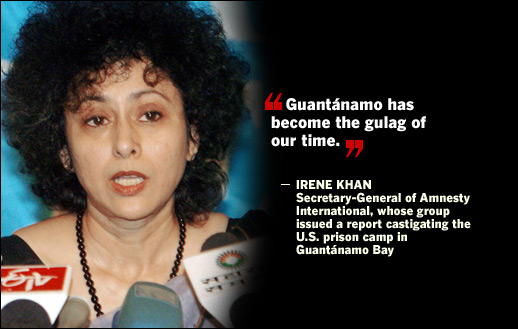
And you said...Chomsky was wrong!!!
Dubya says Amnesty claims are absurd
Amnesty International released its 2005 world report, including the U.S. country report highlighting abuses at U.S. military detainment facilities, and immediately drew irate criticism from the Administration. But it was not the report, nor its substance that the Administration challenged; it was the statement of one Amnesty official, Irene Khan, during the presentation of the report that has drawn fire. She stated that Guantanamo had become “the gulag of our times.” Obviously, she meant that the word Guantanamo had become shorthand for human rights abuses and illegal detention. Ignoring the substance of the report, Cheney homed in on Khan’s statement, “I was offended by it. For Amnesty International to suggest that somehow the United States is a violator of human rights, I frankly just don't take them seriously.” Unusually, in that he usually leaves the trash talk to Cheney, Bush weighed in, too, saying, “It's an absurd allegation. The United States is a country that promotes freedom around the world. When there's accusations made about certain actions by our people, they're fully investigated in a transparent way.”
The word ‘gulag’ appears nowhere else in Amnesty’s report. But despite that, the Administration has successfully diverted attention from the substance, which is rightly a scandal, to a scandal of their own invention. It is not at all unusual for a government accused of human rights abuses to attack the critic rather than address the concerns raised, so the Administration’s tactic of killing the messenger is not unexpected, nor unprecedented. Despite any hyperbole on the part of Amnesty International’s officer, and despite the Administration’s dismissive attitude, Guantanamo Bay and other military detention facilities represent a very serious human rights problem, and a stain upon the honor and repute of the United States in the eyes of the world.
The plain fact is that the Administration has worked very hard to carve out an extra-legal status for these facilities in which neither the U.S. Constitution nor international laws of war and human rights apply. Whenever such extraordinary power is claimed, extraordinary responsibility and accountability is rightly demanded by its own citizens, and by the international community. Clearly, US needs leeway to develop intelligence to prevent and combat terrorism. Given its very limited hum-int capability in the region of concern, prisoners represent the best source of information available to US. But when given extraordinary power over others, it is imperative that accountability for misbehavior and abuse be extraordinarily rigid. This Administration seems to have chosen the exact opposite tack, not only tolerating abuses, but also actually suggesting them. Now the Administration is attempting to protect anyone politically important from taking responsibility for their desperate, and unwise, policies.
The Red Cross and Red Crescent and other independent humanitarian organizations have been allowed to visit, but not inspect or investigate allegations at these facilities. The only investigations have been by the military itself. Such closed systems of accountability are inherently untrustworthy, and world opinion simply reflects a healthy skepticism about any procedure of self-investigation by our military or this Administration or its proxies. Even so, the military has found credible evidence of torture and even homicide in the camps, though not all of the evidence has been made publicly available. Such serious infractions of military discipline and the rules for the treatment of prisoners, whether covered by the Geneva Conventions or not, warrants independent inquiry into these matters. Nothing short of that will restore the honor, integrity, and any claimed transparency in the oversight of these facilities.
I wish I could say that the Administration’s striking out at Amnesty is anything more than a desperate ploy, but the report makes clear, despite any rhetorical excesses by Amnesty officials, that the Bush Administration has turned the United States into a serious violator of human rights on an international scale. Until we summon the will to investigate the many allegations of abuse, independent of people and organizations with a vested interest in protecting this Administration and the GOP from embarrassment, or even criminal liability, we will remain a focus of concern in Amnesty’s future reports, and a symbol of hypocrisy and the corruption of power to the world.
Sameer Bhat
Saturday, June 04, 2005
And you blamed the Newsweek!
Chronicling a shame: Systematic abuse of The Holy Quran in Gimo
Military Details Koran Incidents at Base in Cuba: NY Times
WASHINGTON, June 3 - A military inquiry has found that guards or interrogators at the Guantánamo Bay detention center in Cuba kicked, stepped on and splashed urine on the Koran, in some cases intentionally but in others by accident, the Pentagon said on Friday.
The splashing of urine was among the cases described as inadvertent. It was said to have occurred when a guard urinated near an air vent and the wind blew his urine through the vent into a detainee's cell. The detainee was given a fresh uniform and a new Koran, and the guard was reprimanded and assigned to guard duty that kept him from contact with detainees for the remainder of his time at Guantánamo, according to the military inquiry.
The investigation into allegations that the Koran had been mishandled also found that in one instance detainees' Korans were wet because guards on the night shift had thrown water balloons on the cellblock.
In another case, a two-word obscenity was written in English on the inside cover of a Koran, but investigators could not determine whether a guard or detainee had written it.
Last week, the head of the investigation, Brig. Gen. Jay W. Hood, commander of the Guantánamo Joint Task Force, announced at the Pentagon that his preliminary findings had uncovered five cases in which the Koran was mishandled at the prison, but he refused to provide details.
In releasing those details in a final report on Friday, General Hood emphasized that any abuse of the Koran was unusual and that the military had gone to great lengths to be sensitive to the detainees' religious faiths, including issuing more than 1,600 Korans at the detention center.
"Mishandling a Koran at Guantánamo Bay is a rare occurrence," General Hood said in a statement released by the military's Southern Command. "Mishandling of a Koran here is never condoned."
The investigation was started about three weeks ago after Newsweek magazine published an article asserting that a separate inquiry by the military was expected to find that a Koran had been flushed down a toilet at the detention center. The magazine later retracted the article, but the assertion led to violence in the Muslim world that left at least 17 people dead.
General Hood said last week that there was no credible evidence to substantiate the claim that a Koran had ever been flushed down a toilet at the prison.
The final report released on Friday said that four of the five incidents took place after January 2003, after written procedures governing the handling of the Koran had been put in place. That contradicted an account provided last Thursday by General Hood, who was asked directly whether all five of the incidents had taken place before January 2003, and replied: "Not all of them. One of them occurred since then."
A spokesman for the task force, Capt. Jeffrey Weir, said in a telephone interview that he could not explain General Hood's comments last week. "Maybe he misspoke," Captain Weir said. "I'm not sure why he would have put it that way."
The military released the findings of the investigation about 7:15 p.m., Eastern time, well after the broadcasts of the network television evening news programs. A Pentagon spokesman, Bryan Whitman, denied that the military was trying to bury bad news late on a Friday night, a tactic often used by government agencies. "It was completed and we try not to hold these things after their reviews are completed," Mr. Whitman said in a telephone interview.
Military policy acknowledges that some Muslims consider a non-Muslim touching the Koran as a desecration.
"The Southern Command policy of Koran handling is serious, respectful and appropriate," said Lawrence Di Rita, the Pentagon spokesman, who was traveling with Defense Secretary Donald H. Rumsfeld at a security conference in Singapore. "The Hood inquiry would appear to affirm that policy."
The report said investigators had examined nine alleged incidents in which the Koran was mishandled, either intentionally or unintentionally, and confirmed five of them. Four involved guards at the detention center; one involved an interrogator.
According to the military's statement on Friday, this is what happened in the five confirmed incidents of Koran abuse.
In February 2002, a detainee complained during an interrogation that guards at Camp X-Ray had kicked the Koran of a detainee in a neighboring cell four or five days earlier, the inquiry's report said. The interrogator reported the complaint on Feb. 27, and confirmed that the guards were aware of the complaint.
The report said there was no evidence of any investigation into the incident, and investigators did not say why they believed it was credible or who might have been responsible.
On July 25, 2003, a contract interrogator apologized to a detainee for stepping on the detainee's Koran in an earlier interrogation. The detainee accepted the apology and agreed to tell other detainees and ask them to stop disruptive behavior caused by the incident.
The interrogator was later fired for "a pattern of unacceptable behavior, an inability to follow direct guidance and poor leadership," the military statement said.
On Aug. 15, 2003, two detainees complained to one set of guards that their Korans were wet because guards on the night shift had tossed water balloons on the cellblock. The complaints were recorded in the cellblock's log, but there was no indication that the incident was ever investigated. Investigators described the guards' conduct as "clearly inappropriate" but said it did not cause any disturbance among detainees.
Less than a week later, on Aug. 21, a detainee who spoke conversational English complained that someone had written a two-word obscenity in English in his English-version Koran. The complaint was recorded in an electronic log. "It is possible," the military's statement said, "that a guard committed this act; it is equally possible that the detainee wrote in his own Koran."
On March 25, 2005, a detainee complained to the guards that urine had come through an air vent in his cellblock, and splashed him and his Koran as he lay near the vent. A guard who had left his observation post to urinate outside acknowledged that he was to blame. He had urinated near the vent, and the wind blew it into the vent, from which it splashed into the cell.
The senior guard on duty immediately relieved the guard, and ordered that the detainee receive a fresh uniform and a new Koran. The guard was reprimanded and assigned to duty where he had no contact with detainees for the remainder of his assignment at the detention center.
General Hood's report found 10 other alleged incidents, 7 involving guards and 3 involving interrogators, where the military personnel accidentally touched the Koran, touched a Koran within the scope of their regular duties or did not touch the Koran at all.
The inquiry concluded that none of these events involved mishandling of the Koran, but that some were clearly alarming to detainees, including a case in late 2002 in which an unidentified marine, during an interrogation, was said to have squatted down in front of a detainee "in an aggressive manner."
In the process, the report said, the marine "unintentionally squatted down over the detainee's Koran," and "this provoked a visible reaction from the detainee."
The report also found 15 incidents in which detainees had mishandled the Koran.
The military's statement said the investigation had examined 31,000 documents, both on paper and electronically; classified and unclassified computer drives used by task force personnel; and legal documents and news articles for any mention of possible abuses of the Koran.
General Hood concluded that the current policy regarding the handling of the Koran was appropriate, but the military statement said that some additional minor changes, which it did not describe, were under review.
Sameer Bhat

Friday, June 03, 2005
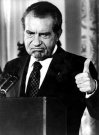
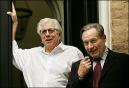
Deep throat finally 'purrs'
Earlier this week, one of the 20th-century's best-kept secrets was revealed when former FBI boss Mark Felt admitted to being Deep Throat, the source behind Watergate. At age 91, after decades of hiding his role -- as The Washington Post's tipster -- from politicians, the public and even his immediate family, Felt finally told his secret to a lawyer his family had consulted on whether Felt should come forward. The sensational revelations about Nixon administration's espoinage activities and clandestine bugging of the Democratic National committee (DNC) offices -- in the Watergate hotel -- in early 1970s brought crashing down his presidency.
Bob Woodward and Carl Bernstein, the Washington Post's lead reporters in the Watergate coverage, broke -- and followed tirelessly -- the Watergate story in August 1972. The first report about the break-in at the Democratic National Committee's headquarters at the Watergate complex in Washington, D.C. broke out on June 17, 1972. Most of newspapers dismissed the story, calling the incident a 'caper.' However, Woodward teamed with Bernstein raised the issue of the link between the burglars and President Nixon's re-election committee with their first report for the Watergate scandal. It was the high-point of their journalistic careers. Infact it was the acme of investigative journalism. Both Bob and Carl would go on to become celebrity journalists, win a pulitzer for the best story on Watergate, write books, and never actually 'reveal' their mysterious source.
The media has worshiped at the altar of "Deep Throat" for 33 years. The character "Deep Throat" was celebrated in major media and leftist culture as the ultimate whistleblower, a man who helped save America's Constitutional republic by exposing the crimes of the Nixon administration.
Untill June 1,2005. Felt came out in Vanity fair magazine declaring, 'I was the man they called Deep Throat'. At last after more than three decades of silence, denails and speculation, the world's best kept secret was out in the open, available for less than a dollar -- price of a vanity fair copy.
"Watergate" is a general term used to describe a complex web of political scandals between 1972 and 1974. The word specifically refers to the Watergate Hotel in Washington D.C. The term entered the political lexicon as a word synonymous with corruption and scandal, yet the Watergate Hotel is one of Washington's plushest hotels. Even today, it is home to former Senator Bob Dole and was once the place where Monica Lewinsky laid low. It was here that the Watergate Burglars broke into the Democratic Party's National Committee offices on June 17, 1972. If it had not been for the alert actions of Frank Wills, a security guard, the scandal may never have erupted.
The scandal that brought Nixon's resignation began with a burglary and attempted tapping of phones in Democratic Party offices at the Watergate office building in Washington during Nixon's 1972 re-election campaign. It went on to include disclosures of covert Nixon administration spying on and retaliating against a host of perceived enemies. But the most devastating disclosure was the president's own role in trying to cover-up his administration's involvement.
Bob and Carl relentlessly followed the story, aided by their mysterious source. Among other things, Deep Throat urged Woodward and Bernstein to follow the money trail -- from the financing of burglars who broke into the Democratic National Committee offices to the financing of Nixon's re-election campaign. The resulting campaign finance scandal led Congress to overhaul the nation's campaign finance rules, ordering federal candidates and national party committees to disclose their donors' identities and observe new contribution limits.
Forty government officials and members of Nixon's re-election committee were convicted on felony charges. Felt was convicted in 1980 for authorizing illegal break-ins in the 1970s at homes of people associated with the radical Weather Underground. He was pardoned by President Reagan in 1981.
At 9 pm on the evening of August 8, 1974, Nixon delivered a nationally televised resignation speech. The next morning, he made his final remarks to the White House staff before sending his resignation letter to the Secretary of State, Dr. Henry Kissinger.
Gerald Ford became the 38th President of the United States when Nixon resigned on August 9, 1974. He was the first Vice-President and the first President to ascend to both positions without being elected. Regarded on all sides of politics as a decent man, Ford will be remembered for his controversial pardon of Richard Nixon.
Nixon died in 1994 and was eulogised by the political establishment, although he was still a figure of controversy.
Nixon never knew who his nemesis was. Although Felt was always in the realm of suspicion but his name was always a speculation, along with numerous others. Woodward, Bernstein and Bradlee -- WP editor -- had kept the identity of Deep Throat secret at his request, saying his name would be revealed upon his death. But then Felt revealed it himself, a move that startled Woodward , Bernstein and the Post, the newspaper reported yesterday.
Also surprised was Nixon chief counsel Charles Colson, who worked closely with Felt in the Nixon administration and served prison time in the Watergate scandal. Even the existence of Deep Throat, nicknamed for an X-rated movie of the early 1970s, was kept secret for a time. Woodward and Bernstein revealed their reporting had been aided by a Nixon administration source in their best-selling book "All the President's Men." Felt's name doesn't appear there.
A hit movie was made of the book in 1976 starring Robert Redford and Dustin Hoffman. It portrayed cloak-and-dagger methods employed by Woodward and Deep Throat. When Woodward wanted a meeting, he would position an empty flowerpot containing a red flag on his apartment balcony. When Deep Throat wanted to meet, the hands of a clock would appear written inside Woodward's New York Times on page 20.
The identity of the source had sparked endless speculation over the past three decades. Dean, Nixon chief of staff Alexander Haig, White House press aide Diane Sawyer, speechwriter Pat Buchanan and Garment were among those mentioned as possibilities.
Felt also had been mentioned, but he regularly denied it. His motive for tipping off Woodward and Bernstein remains unknown, but the Post suggested in a story Tuesday night that anger over Nixon's decision to pass him over for FBI director after the death of J. Edgar Hoover could have been a factor.
Whatever the reasons. I think all of us love to keep secrets and when secrets are outed, they loose the curiosity about them. I respect the manner in which the identity of Deep Throat was protected by Bob and Carl.
Now that modern history's most intriguing secret is out , let us raise a toast to WP, Bob and Carl for their work and word! For Felt, because the world needs Deep throats -- to keep the faith intact -- in democratic institutions and transpiracy at high places.
For a more sweet sip!
Sameer Bhat

Wednesday, June 01, 2005
Tuesday, May 31, 2005
A game of double bluff
The UK and EU are keeping the poorer nations exactly where they want them: beholden to their patrons
Rejoice! The world is saved! The governments of Europe have agreed that by 2015 they will give 0.7% of their national income in foreign aid. Admittedly, that's 35 years after the target date they first set for themselves, and it's still less than they extract from the poor in debt repayments. But hooray anyway. Though he does not become president of the EU until later this year, Tony Blair can take some of the credit, for his insistence that the G8 summit in July makes poverty history. It's inspiring, until you understand the context.
Everyone who has studied global poverty - including European governments - recognises that aid cannot compensate for unfair terms of trade. If they increased their share of world exports by 5%, developing countries would earn an extra $350bn a year, three times more than they will be given in 2015. Any government that wanted to help developing nations would surely make the terms of trade between rich and poor its priority.This, indeed, is what the UK appears to have done. In March it published the most progressive foreign policy document ever to have escaped from Whitehall. A paper by the departments of trade and international development promised that: "We will not force trade liberalisation on developing countries." It recognised that a policy that insists on equal terms for rich and poor is like pitting a bull mastiff against a chihuahua. Unless a country can first build up its industries behind protectionist barriers, it will be destroyed by free trade. Almost every nation that is rich today, including the UK and the US, used this strategy. But the current rules forbid the poor from following them. The EU, the paper insisted, should, while opening its own markets, allow poor nations "20 years or more" to open theirs.
But two weeks ago the Guardian obtained a leaked letter showing that Peter Mandelson, the European trade commissioner, was undermining the UK's new policies. His most senior official complained that the policy document was "a major and unwelcome shift... Mandelson is taking up our concerns and will press for a revised UK line".
We are being asked to believe, in other words, that a man who owes his entire political career to Tony Blair, and who has repaid him with nauseating sycophancy, was conspiring to destroy his cherished policy. It doesn't look likely, and it doesn't take a great imaginative effort to see a double game being played. Before the election, Blair makes one of his tear-jerking appeals for love, compassion and human fellowship, and gets the anti-poverty movement off his back. After the election he discovers, to his inestimable regret, that love, compassion and human fellowship won't after all be possible, as a result of a ruling by the European commission.
This outcome was predicted by the World Development Movement when the remarkable paper was published in March. "Time will tell if the UK ... will put real political capital into this announcement, or if they will hide behind the European commission and claim inability to affect the negotiations." Nostradamus had nothing on these guys.
The idea that Blair had no more intention of introducing fair terms of trade than I have of becoming a Catholic priest gains credence from the UK's support for the bid by Pascal Lamy, Mandelson's predecessor, to become head of the World Trade Organisation - a post he won on Thursday. Making Lamy head of the WTO is as mad as making, say, Paul Wolfowitz... er, satire doesn't really seem to work any more.
Everyone seems to have forgotten that Lamy was the man who destroyed the world trade talks in Mexico in September 2003. He tried to force through new rules on investment, competition and procurement, which would have allowed corporations to dictate terms to the poor world's governments. He persisted with this policy even when he had lost the support of European governments, and when it became obvious that his position would force the poorer nations to pull out. For cynics like me, it wasn't hard to see why. For the first time in the WTO's history, the poor nations were making effective use of collective bargaining and demanding major concessions from the rich. By destroying the talks, Lamy prevented a fairer trading regime from being introduced. He left the rich countries free to strike individual treaties with their weaker trading partners. And the UK and the rest of Europe hid behind him.
So the poor world is going to need the extra aid, in 2015 and far beyond. This means that it will remain obedient to the demands of countries with an interest in its continued exploitation. Those demands have done more than anything else to hold it down. As the World Bank's own figures show, across the 20 years (1960-80) before it and the IMF started introducing strict conditions on the countries that accepted their loans, median annual growth in developing countries was 2.5%. In the 18 years after (1980-1998), it was 0.0%.
The British government has made its own contribution to the poor world's misery by tying aid disbursements to the privatisation of essential public services. It has been paying the Adam Smith Institute, a rightwing lobby group, up to £9m a year to oversee privatisation programmes in developing countries. Last week Tanzania pulled out of a deal UK government had rigged up for the British company Biwater to privatise water supplies in Dar es Salaam.
Again the government admitted, before the election, that its critics were right. The Department for International Development (DfID) published a long mea culpa in which it promised: "We will not make our aid conditional on specific policy decisions by partner governments, or attempt to impose policy choices on them (including ... privatisation or trade liberalisation)." It looks great, until you read the whole document. On privatisation, DfID admits that there was "concern that in the 1980s and 1990s donors pushed for the introduction of reforms, regardless of whether these were in countries' best interests." The 80s and 90s, eh? What about the privatisation it was demanding in 2004 and early 2005? What about its recent assault on the public services of Tanzania, South Africa, Ghana and the Indian state of Andhra Pradesh? What about the money it is still paying the effing Adam Smith Institute?
DfID goes on to say that it will decide whether to give money to a country by looking "to the IMF to provide an assessment of a country's macroeconomic position". It knows full well that the IMF continues to judge countries by the degree to which they embrace privatisation and liberalisation. Yet again the British government is outsourcing its ethics, using the policy of an international body to make justice history.
While using the right language and flattering their critics, the UK and the EU are keeping the poorer nations where they want them: beholden to their patrons. Suddenly, an increase in aid doesn't look like such good news after all.
With thanks
George Monbiot
www.monbiot.com
Monday, May 30, 2005

Saturday, May 28, 2005
Why the French said non
French rubbished the referendum, calling for an European constitution, here is a reason why:
- They detest their current government and are reluctant to vote for anything that it proposes
- They are fed up with their entire political class, on both right and left, which they feel is arrogant, self-serving, removed from real life and has refused to listen to their concerns for too long
- They believe the treaty is a blueprint for an ultra-liberal, Anglo-Saxon Europe that will promote unfettered capitalism
- They believe it will degrade French public services and cost French jobs
- They feel that when the president, the government and the mainstream opposition combine to trumpet the merits of something and to implicitly denounce its opponents as half-wits who have understood nothing, it is their moral duty to revolt
- They feel ditto, but even more strongly, when virtually every newspaper, TV and radio commentator more or less explicitly backs the constitution and expresses amazement at the very possibility of a no vote
- They are worried about the expanded (and expanding) union and about its impact on their lives, particularly the arrival in France en masse of the key bogeyman of this debate, the Polish plumber (don't even mention the Turkish taxi-driver)
- They believe the French social model is preferable to any other, is at threat, and is worth defending
- They have finally been asked to give their opinion on a Europe that they feel has been constructed more or less behind their backs, and they're damned well going to give it
- They remember that every time over the past decade that a French politician has had to make a difficult announcement, he has blamed Brussels
- They do not feel that saying no will weaken France's position in Europe, because they think it will trigger a tidal wave of comprehension and support in a great many other countries leading to a "salutary crisis" that will eventually create a better, more social Europe
- They believe the text of the treaty can be renegotiated to take account of France's concerns and objections
- They reject the argument of European institutional chaos, saying the treaty of Nice will continue to apply for as long as necessary until the mess is sorted out
- They feel they are not anti-European, just anti the Europe they perceive as enshrined in this constitution, so voting no is actually a pro-European act
- They recognise that the yes camp ran a rubbish campaign led by a president and a prime minister with zero credibility and a Socialist party that could not make its mind up, and whose sole argument for far too long was to say no to the no
- They realise that from the start, the yes was on the defensive rather than the offensive; it admitted the text was "not perfect" and (on both left and right) was never comfortable handling the fundamental issue (very sensitive in France) of economic liberalism
- They are reacting belatedly to the fact that no French politician has ever dared tell them that France will, in one way or another, have to adapt at some stage to the phenomenon of globalisation, and that it will probably involve some degree of pain
- Their very French instinct (and, up to a point, it's one to be proud of) is: Resist
- They subscribe to the notion that 'le compromis n'est pas français'
- Being French, and not living in a colourless Anglo-Saxon world, they were itching for the mother of all ideological debates, the one that would finally pit the true socialism against wicked liberalism, and the treaty gave them the perfect opportunity because its clauses are open to interpretation (that's the point of them, of course - they are not supposed to be doctrine)
Sameer Bhat
Thursday, May 26, 2005
RIP, Mr Dutt

Dutt saab
1929-2005
"Disease and suffering have no religion and no nationality. My work encompasses mankind." Sunil Dutt
I have not watched all his classics. I never met him. I have no idea about the full extent of his charitable work. Yet, I feel sorry that he is no more. Sunil Dutt's genteel face gave it all away. He was many things in that towering six-plus frame -- a thorough gentleman, an iconic movie star, a great human being and a secularist to the core, up until his sudden end. Frankly, Dutt Saab, as he was affectionately called, was one of those virtuous souls, who you wish never die.
What also stood Sunil Dutt in good stead was his heart-in-his-eyes sensitivity which noted filmmakers like Bimal Roy, B R Chopra and Raj Khosla repeatedly drew upon. Dutt capitalised on his abilty to jump genres and expand on his oeuvre at different stages of his career. His willingness to experiment with cinema led him to star in offbeat films like Padosan and Amrapali, be the villain in Geeta Mera Naam, and bankroll films like Yaadein ,a film starring just one man --- himself, Mujhe Jeene Do -- a reformist saga -- and the stark desert epic Reshma Aur Shera.
Dutt's heroic deed on the set of Mother India changed the course of his life. He saved Nargis from a burning film set and later they got married in what is considered one of the great storybook romances of Bollywood history. After making an indelible mark on the filmdom in Bombay and having etched his name in the golden annals of India cinema, Dutt saab took to activism. The death of his wife, Nargis Dutt in 1981, whom he loved intensely, transformed his life. He fought for the rights of the poor. It was Nargis's wish that cancer research be forwarded in India and to that effect Dutt spearheaded the creation of the Nargis Dutt Cancer Foundation.
He became a Member of Parliament and advocated peace. Again he brought a serene dignity to politics, quite unknown of, in recent times. He campaigned for communal harmony, against drug abuse and for better care for cancer and HIV and AIDS patients.
Selfless, tireless and humane, that was Sunil Dutt for those who have know him. For me, he will continue to be among the select few Indians, I admire.
He loved Nargis till lady death kissed him in his sleep. I pray they -- Nargis and Dutt saab -- stroll together, hand in hand, in the gardens of heaven.
Sameer Bhat
Tuesday, May 24, 2005
Beauty or Bend!
VS Naipaul can be difficult for any soul. His prose is generally terse and philosophical. His metaphors can leave you gasping. I picked up his A Bend in the River because I wanted to read something disparate after Dan's Da vinci code. The novel is set in Africa and Naipaul penned it in 1979. Thirty pages into BR and I gave up. Not that I won't read it. I might, perhaps later. My guess is that one can't read Naipaul leisurely in cabs and buses.
I love to read that way. In a busy work schedule you have no time otherwise.
Naipaul makes you think hard and deep. In the 30 odd pages of BR, I guess he uses the word Africa and Bush 50 times. Boondocks. I was almost transported to the bushes and deep into Africa when I decided I must come back and keep Naipaul for home. Relaxed and on your bed, with an air-conditioner purring, he can be better understood. A book has to be assimilated and doten on!
Naipaul is a great author. I don't agree with his strong, at times banal political views, but I love his prose.
I cannot reflect and do justice with his works in the grinding heat and grime of New Delhi's Auto's and oven-hot roads. Allan Hollinghurst will do. In fact, The Line of Beauty bagged Man Booker last summer.
I am already fimiliar with Nick.
Allan knows his readers!
Sameer bhat
Monday, May 23, 2005
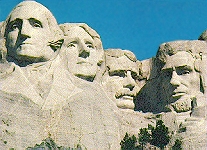
Thursday, May 19, 2005
Converts
NY times publised a reader's comment on may 19, 2005 which went on like -- Convert all Muslims and make them Cristians, so that they will learn to live in peace.
Convert them to Christianity and let them eat cake. This might well be a solution. Though I suspect that they, like other Christians, would then start squabbling about minor and irrelevant liturgical and theological differences; then the Shiite-christians would say that God told them THEY owned the oil wells, and the Suni-Christians would say, no they do above the Mosul parallel. Then the Texas-Christians would say, no God gave us all the oil, so it's ours, and the Kansas Christians would then begin talking in tongues, or some other form of ungrammatical English, et al... Being Christian, in other words, has nothing to do with peace. Look at Northern Ireland. Look at the history of Christianity. Whistle "National Brotherhood Week" under the shower...
What makes me giggle a little, of course, is that there is a terrific resemblance between the fundamentalist Christians and fundamentalist Moslems these days. All this fire and brimstone for the sake of some religious hallucinations, and at the bottom of it are the old motives: power, money, control.
So I propose: instead of converting the Muslims, let them fight it out, for this seems to be the much touted Armageddon that will bring peace to the planet. Those on the sidelines should always support the losing side (that is why America started selling arms to Iran as well as to Iraq in the 80s, so that the two countries could whack each other into oblivion). Once these two prosyletizing, colonial, power-mad groups have exhausted themselves, the world may finally have the peace and quiet to get on with more important pursuits, such as correcting the environmental problems we have, spreading the wealth a little, instituting universal healthcare, etc... Because most people, I suspect, just want to get on with life, raising their families, doing their work, enjoying some good times between the cradle and the grave, even making whooppee without some blue-nose peering into the gardenshed window. And this, throughout the ages, has been impeded by the constant interference of men with axes to grind, men with power-obsessions, men of extreme greed, men filled with hatred for anyone who is serene. They range from the Bishop of Lyon in the 2nd century AD to George W. Bush. And most, the overwhelming majority, mark my words, have been men.
And who suffers? The women and children and men who have better things to do than run around the planet destroying things, raping, pillaging, acting like unbalanced 10-year-olds.
Each time I read about some GI who has been knocked off in Iraq and is praised as a good family man, I wonder, then, what in earth he was doing on such an adventure. That is immorality itself. But I have digressed from the subject.
Sameer
Truth unveiled
The descecration of a copy of Holy Quran at the hands of US troops in Guantanamo bay has led to a bitter debate about a range of issues. About the veracity of such media reports, about the military ethics of the US and above all the lack of transpiracy in the US administration.
I reproduce here excerpts from the Newyork times edit on 18 may 2005.
A Sudden Taste for Openness
Newsweek is under intense criticism for a report it has now retracted about the American prison in Guantánamo Bay. Since we've weathered a journalistic storm or two, we can only say the best approach is transparency as Newsweek fixes whatever is broken, if anything. There is already a debate about journalistic practices, including the use of anonymous sources, and these things are worth discussing - especially at a time of war, national insecurity and extreme government secrecy, a time when aggressive news reporting is critical. But it is offensive to see the Bush administration use this case for political purposes, and ludicrous for spokesmen for this White House and Defense Department to offer pious declarations about accountability, openness and concern for America's image abroad.
It took Newsweek about two weeks to retract its report. It has been a year since the very real problem behind the article - the systematic abuse and deliberate humiliation of mainly Muslim prisoners - came to light through the Abu Ghraib disaster. And the Bush administration has not come close to either openness or accountability. The White House and the Pentagon have refused to begin any serious examination of the policymaking that led to the abuse, humiliation, torture and even killing of prisoners taken during antiterrorist operations and the invasion of Iraq. Meanwhile, the administration has stonewalled outside efforts to accomplish that task. No senior officer or civilian official has been held accountable for policies that put every American soldier at greater risk. The men who wrote the memos on legalized torture and evading the Geneva Conventions have been promoted.
If the Pentagon is as enthusiastic about accountability in its own house as its spokesman, Lawrence Di Rita, is when it comes to Newsweek, then it should release the Southern Command's report on Guantánamo Bay, on which the magazine report was based. The administration should also release all the other reports on prisoner abuse it has been withholding, including one by the Central Intelligence Agency about its illegal practice of hiding prisoners from the Red Cross. And it should encourage Senator John Warner, chairman of the Senate Armed Services Committee, to conduct a full investigation of the formation of the policy on prisoners, rather than pressuring him to stop.
I reproduce here excerpts from the Newyork times edit on 18 may 2005.
A Sudden Taste for Openness
Newsweek is under intense criticism for a report it has now retracted about the American prison in Guantánamo Bay. Since we've weathered a journalistic storm or two, we can only say the best approach is transparency as Newsweek fixes whatever is broken, if anything. There is already a debate about journalistic practices, including the use of anonymous sources, and these things are worth discussing - especially at a time of war, national insecurity and extreme government secrecy, a time when aggressive news reporting is critical. But it is offensive to see the Bush administration use this case for political purposes, and ludicrous for spokesmen for this White House and Defense Department to offer pious declarations about accountability, openness and concern for America's image abroad.
It took Newsweek about two weeks to retract its report. It has been a year since the very real problem behind the article - the systematic abuse and deliberate humiliation of mainly Muslim prisoners - came to light through the Abu Ghraib disaster. And the Bush administration has not come close to either openness or accountability. The White House and the Pentagon have refused to begin any serious examination of the policymaking that led to the abuse, humiliation, torture and even killing of prisoners taken during antiterrorist operations and the invasion of Iraq. Meanwhile, the administration has stonewalled outside efforts to accomplish that task. No senior officer or civilian official has been held accountable for policies that put every American soldier at greater risk. The men who wrote the memos on legalized torture and evading the Geneva Conventions have been promoted.
If the Pentagon is as enthusiastic about accountability in its own house as its spokesman, Lawrence Di Rita, is when it comes to Newsweek, then it should release the Southern Command's report on Guantánamo Bay, on which the magazine report was based. The administration should also release all the other reports on prisoner abuse it has been withholding, including one by the Central Intelligence Agency about its illegal practice of hiding prisoners from the Red Cross. And it should encourage Senator John Warner, chairman of the Senate Armed Services Committee, to conduct a full investigation of the formation of the policy on prisoners, rather than pressuring him to stop.
Friday, May 13, 2005
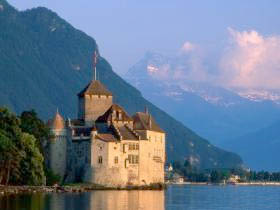
Monday, May 09, 2005
The Portugese Connection
PEDRO
Internet is a wonderful, wonderful tool. If I were asked to single out one particular invention in the last 100 years, without battling an eyelid, I will mark, Internet. The world-wide-web is a magical realm that catapults us in a new universe, beyond boundaries, where mountains cease to exist, beyond the cacophony and high seas -- a world that is so vast, so informative, so intimate and so loving.
I met a charming 15-year old kid from Portugal in one of the labyrinthine alleys of internet. I wasn't particularly cruising for a friend or an acquaintance and yet I chanced upon one. A class 9 student, Pedro is so full of life. Something of a wonder-kid. He is actually a geek. He loves to play with Mindstorm and Legos and makes the best robots ever.
Pedro loves reading and has already devoured Harry Potter and The Order of The Phoenix... as well as other books... and a book about sex that he feels is very interesting (thats what you call a 15 year naughty brat).
Pedro fascinates me. Away from the serious world of business and finance and my hectic work-schedule, he comes as such a relief. He makes you smile with curious innocence. I'll love to meet him someday in Pardilhó, his hometown, tucked away somewhere in the beautiful coastal city of Aveiro. I haven't been to south-western Europe yet but I feel like as I have already trudged the north-Atlantic sea-front. At least I have a little friend, who loves to swim, ride and watch airplanes take off near the wind swept beaches of his lovely country.
Sameer Bhat
Internet is a wonderful, wonderful tool. If I were asked to single out one particular invention in the last 100 years, without battling an eyelid, I will mark, Internet. The world-wide-web is a magical realm that catapults us in a new universe, beyond boundaries, where mountains cease to exist, beyond the cacophony and high seas -- a world that is so vast, so informative, so intimate and so loving.
I met a charming 15-year old kid from Portugal in one of the labyrinthine alleys of internet. I wasn't particularly cruising for a friend or an acquaintance and yet I chanced upon one. A class 9 student, Pedro is so full of life. Something of a wonder-kid. He is actually a geek. He loves to play with Mindstorm and Legos and makes the best robots ever.
Pedro loves reading and has already devoured Harry Potter and The Order of The Phoenix... as well as other books... and a book about sex that he feels is very interesting (thats what you call a 15 year naughty brat).
Pedro fascinates me. Away from the serious world of business and finance and my hectic work-schedule, he comes as such a relief. He makes you smile with curious innocence. I'll love to meet him someday in Pardilhó, his hometown, tucked away somewhere in the beautiful coastal city of Aveiro. I haven't been to south-western Europe yet but I feel like as I have already trudged the north-Atlantic sea-front. At least I have a little friend, who loves to swim, ride and watch airplanes take off near the wind swept beaches of his lovely country.
Sameer Bhat
From D-day to VE-Day
The 60th annev of VE
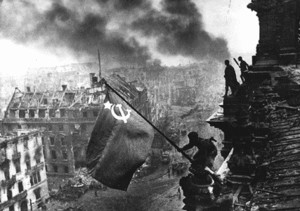
The world is partying in Moscow. Major world leaders are tossing mugs of beer to mark the passing of 6 decades of Europe's most devastating war. VE: Victory in Europe. It has been 60 long years since Adolf Hitler's Third Reich was destroyed by the allied forces on this day. May 8, 1945. The Axis -- as the German-Italo-Japs alliance was called, collapsed in those early summer days in Europe. Victory in Europe didn't come easy. More than 50 million people lost their lives, half of them Russians. Nazi's sent about 6 million Jews to gas chambers and fashioned the biggest holocaust in human history. In June of 1944, western allies invaded German-occupied France, sailing from Great Britian to storm onto the windswept Normandy beaches amid the cracle of gunfire, as Ron Regan once famously put it. That was the begining of the end of what appeared to be greatest power of the time. Adolf Hitler's Nazi movement. During Hitler's dictatorship, "Heil Hitler" had become a more than the paganlike chant at rallies and parades, it was infact the common form of address. On May 8, 1945, final capitulation was signed by Germans in Berlin. The soviet flag fluttered atop Hitler's palace. The Red Army hoisted the Flag of the Soviet Union over the ruins of the Reichstag marking the begining of a new era!
A new begining had already dawned!
Thursday, May 05, 2005
The Da Vinci code
A great book that cuts across the barebones of belief and faith
I just finished reading The Da Vinci code. It is an amazing book and an extremely erudite one too. The book in its pre-prologue page states that “All descriptions of artwork, architecture, documents, and secret rituals in this novel are accurate.” And it was one commingle of secrets, codes and intrigue that I came across, as I flipped pages upon pages of this wonderfully-written work. In their quest to unravel the mystery of the keystone -- which has a deep religious significance -- the protagonists race against time and cadasters. I felt like a part of the small team, working my way to find the final magical word, that would unleash the greatest secret in humanity.
To cut a long story short:
While in Paris on business, Harvard symbologist Robert Langdon receives an urgent late-night phone call: the elderly curator of the Louvre has been murdered inside the museum. Near the body, police have found a baffling cipher. Solving the enigmatic riddle, Langdon is stunned to discover it leads to a trail of clues hidden in the works of Da Vinci…clues visible for all to see…and yet ingeniously disguised by the painter. Langdon joins forces with a gifted French cryptologist, Sophie Neveu, and learns the late curator was involved in the Priory of Sion—an actual secret society whose members included Sir Isaac Newton, Botticelli, Victor Hugo, and Da Vinci, among others. The Louvre curator has sacrificed his life to protect the Priory's most sacred trust: the location of a vastly important religious relic, hidden for centuries.
In a breathless race through Paris, London, and beyond, Langdon and Neveu match wits with a faceless powerbroker who appears to work for Opus Dei—a clandestine, Vatican-sanctioned Catholic sect believed to have long plotted to seize the Priory's secret. Unless Langdon and Neveu can decipher the labyrinthine puzzle in time, the Priory's secret—and a stunning historical truth—will be lost forever.
In an exhilarating blend of relentless adventure, scholarly intrigue, and cutting wit, symbologist Robert Langdon -- first introduced in Dan Brown's bestselling Angels & Demons -- is the most original character to appear in years. The da vinci code heralds the arrival of a new breed of lightening-paced, intelligent thriller…surprising at every twist, absorbing at every turn, and in the end, utterly unpredictable…right up to its astonishing conclusion.
Sameer Bhat
I just finished reading The Da Vinci code. It is an amazing book and an extremely erudite one too. The book in its pre-prologue page states that “All descriptions of artwork, architecture, documents, and secret rituals in this novel are accurate.” And it was one commingle of secrets, codes and intrigue that I came across, as I flipped pages upon pages of this wonderfully-written work. In their quest to unravel the mystery of the keystone -- which has a deep religious significance -- the protagonists race against time and cadasters. I felt like a part of the small team, working my way to find the final magical word, that would unleash the greatest secret in humanity.
To cut a long story short:
While in Paris on business, Harvard symbologist Robert Langdon receives an urgent late-night phone call: the elderly curator of the Louvre has been murdered inside the museum. Near the body, police have found a baffling cipher. Solving the enigmatic riddle, Langdon is stunned to discover it leads to a trail of clues hidden in the works of Da Vinci…clues visible for all to see…and yet ingeniously disguised by the painter. Langdon joins forces with a gifted French cryptologist, Sophie Neveu, and learns the late curator was involved in the Priory of Sion—an actual secret society whose members included Sir Isaac Newton, Botticelli, Victor Hugo, and Da Vinci, among others. The Louvre curator has sacrificed his life to protect the Priory's most sacred trust: the location of a vastly important religious relic, hidden for centuries.
In a breathless race through Paris, London, and beyond, Langdon and Neveu match wits with a faceless powerbroker who appears to work for Opus Dei—a clandestine, Vatican-sanctioned Catholic sect believed to have long plotted to seize the Priory's secret. Unless Langdon and Neveu can decipher the labyrinthine puzzle in time, the Priory's secret—and a stunning historical truth—will be lost forever.
In an exhilarating blend of relentless adventure, scholarly intrigue, and cutting wit, symbologist Robert Langdon -- first introduced in Dan Brown's bestselling Angels & Demons -- is the most original character to appear in years. The da vinci code heralds the arrival of a new breed of lightening-paced, intelligent thriller…surprising at every twist, absorbing at every turn, and in the end, utterly unpredictable…right up to its astonishing conclusion.
Sameer Bhat
Wednesday, May 04, 2005
The Vitruvain man
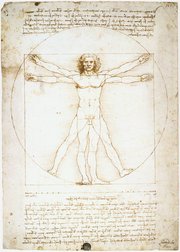
Vitruvain man is a Da vinci gem
The Vitruvian Man is a famous drawing with accompanying notes by Leonardo da Vinci made around the year 1490 in one of his journals... It depicts a naked male figure in two superimposed positions with his arms apart and simultaneously inscribed in a circle and square. The drawing and text are sometimes called the Canon of Proportions. The drawing is in pen, ink, and watercolor over metalpoint, and measures 34.3 x 24.5 cm. It is currently part of the collection of the Gallerie dell'Accademia in Venice.
According to Leonardo's notes in the accompanying text, which are mirror writing, it was made as a study of the proportions of the (male) human body as described in a treatise by the Ancient Roman architect Vitruvius, who wrote that in the human body:
- A palm is the width of four fingers
- a foot is the width of four palms
- a cubit is the width of six palms
- a man's height is four cubits (and thus 24 palms)
- a pace is four cubits
Leonardo is clearly illustrating Vitruvius De Architectura 3.1.3 which reads: The navel is naturally placed in the centre of the human body, and, if in a man lying with his face upward, and his hands and feet extended, from his navel as the centre, a circle be described, it will touch his fingers and toes. It is not alone by a circle, that the human body is thus circumscribed, as may be seen by placing it within a square. For measuring from the feet to the crown of the head, and then across the arms fully extended, we find the latter measure equal to the former; so that lines at right angles to each other, enclosing the figure, will form a square.
The rediscovery of the mathematical proportions of the human body in the 15th century by Leonardo and others is considered one of the great achievements leading to the Italian Renaissance. Note that Leonardo's drawing combines a careful reading of the ancient text, combined with his own observation of actual human bodies. In drawing the circle and square he correctly observes that the square cannot have the same center as the circle, the navel, but is somewhat lower in the anatomy. This adjustment is the innovative part of Leonardo's drawing and what distinguishes it from earlier illustrations.
The drawing itself is often used as an implied symbol of the essential symmetry of the human body, and by extension, to the universe as a whole.
It may be noticed by examining the drawing that the combination of arm and leg positions actually creates sixteen different poses. The pose with the arms straight out and the feet together is seen to be inscribed in the superimposed square. On the other hand, the "spread-eagle" pose is seen to be inscribed in the superimposed circle. This illustrates the principle that in the shift between the two poses, the apparent center of the figure seems to move, but in reality, the navel of the figure, which is the true center of gravity, remains motionless.
Sameer
Monday, May 02, 2005
Humour in the White house
Laura Bush took over the mike at the media dinner at the White House.
I have some very strong political views and I have no qualms about it. I dislike the American foriegn policy. I abhor the opressive US candour. I completely disagreed with Prez Bush's decision to go to an unjust war in Iraq. I detest the mischief United States is upto, world over. However, I would be compelled to add that I love the people of America, the values they stand for. I admire their spirit of freedom and resilience. I salute their valor. I love Hollywood and their liberal culture. I adore the first lady. Nowhere in the world do we have such an informal arrangement where a first lady so graciously springs forth and draws the assembly into peels of laughter. At the anual media dinner the former librarian spoke so candidly and hilariously that she almost sounded real! And the most powerful person on God's green earth -- Dubya -- could do nothing but smile, I mean laugh!
Wish the world were more jovial and the US policies as frontal!
The complete transcript of Laura Bush's comments from the White House Correspondents' Association dinner, held April 30:
President Bush: Thank you and good evening. I always look forward to these dinners, where I'm supposed to be funny — intentionally. I'm really looking forward to hearing Cedric the Entertainer. I kind of think of myself that way.
Cedric, did you hear that hilarious line I ad-libbed down in Arkansas? A woman in a town meeting told me she was from DeQueen, and I said, 'That's right next to DeKing.' You gotta' admit that's pretty good, Cedric. That's what you call sophisticated re — par — tay.
Then out in Montana, I told a joke about a cattle guard, which, to be honest, didn't get a very big laugh — actually, none. But Cedric, I think you'll appreciate this, and you can use it if you want to. See, there was this city slicker who was driving around lost and he came across this ol' cowboy. And so the city slicker asked the old guy how to get to the nearest town, and —
First Lady Laura Bush: Not that old joke — not again.
Ladies and gentlemen, I've been attending these dinners for years and just quietly sitting there. Well, I've got a few things I want to say for a change. This is going to be fun because he really doesn't have a clue about what I'm gonna' to say next. George always says he's delighted to come to these press dinners. Baloney. He's usually in bed by now. I'm not kidding. I said to him the other day, "George, if you really want to end tyranny in the world, you're going to have to stay up later."
I am married to the president of the United States, and here's our typical evening: Nine o'clock, Mr. Excitement here is sound asleep, and I'm watching Desperate Housewives— with Lynne Cheney. Ladies and gentlemen, I am a desperate housewife. I mean, if those women on that show think they're desperate, they oughta be with George.
One night, after George went to bed, Lynne Cheney, Condi Rice, Karen Hughes and I went to Chippendale's. I wouldn't even mention it except Ruth Ginsberg and Sandra Day O'Connor saw us there. I won't tell you what happened, but Lynne's Secret Service codename is now "Dollar Bill."
But George and I are complete opposites — I'm quiet, he's talkative, I'm introverted, he's extroverted, I can pronounce nuclear —! The amazing thing, however, is that George and I were just meant to be. I was the librarian who speant 12 hours a day in the library, yet somehow I met George. We met, and married, and I became one of the regulars up at Kennebunkport. All the Bushes love Kennebunkport, which is like Crawford, but without the nightlife. People ask me what it's like to be up there with the whole Bush clan. Lemme put it this way: First prize — three-day vacation with the Bush family. Second prize — 10 days.
Speaking of prizes brings me to my mother-in-law. So many mothers today are just not involved in their children's lives — Not a problem with Barbara Bush. People often wonder what my mother-in-law's really like. People think she's a sweet, grandmotherly, Aunt Bea type. She's actually more like, mmm, Don Corleone.
Cedric, am I doing all right? I saw my in-laws down at the ranch over Easter. We like it down there. George didn't know much about ranches when we bought the place. Andover and Yale don't have a real strong ranching program. But I'm proud of George. He's learned a lot about ranching since that first year when he tried to milk the horse. What's worse, it was a male horse.
Now, of course, he spends his days clearing brush, cutting trails, taking down trees, or, as the girls call it, The Texas Chainsaw Massacre. George's answer to any problem at the ranch is to cut it down with a chainsaw — which I think is why he and Cheney and Rumsfeld get along so well. It's always very interesting to see how the ranch air invigorates people when they come down from Washington. Recently, when Vice President Cheney was down, he got up early one morning, he put on his hiking boots, and he went on a brisk, 20- to 30-foot walk.
But actually, in all seriousness, I do love the ranch, and I love the whole Bush family. I was an only child, and when I married into the extended Bush clan, I got brothers and sisters and wonderful in-laws, all of whom opened their arms to me. And included in the package, I got this guy here.
I think when you marry someone, you unconsciously are looking for something in your spouse to help fulfill something in you, and George did that for me. He brought fun and energy into my life and so many other things. George is a very good listener, he's easy to be around, and on top of it all, he's a loving father whose daughters absolutely adore him.
So in the future, when you see me just quietly sitting up here, I want you to know that I'm happy to be here for a reason — I love, and enjoy being with, the man who usually speaks to you on these occasions. So George and I thank you for inviting us, thank you for all of the good work that you and the press do, and thank you for your very kind hospitality this evening.
Repeated references to Cedris the entertainer: "Considered one of the funniest comics in America, Actor/Comedian Cedric ‘The Entertainer’ is best known as one of the headlining stars of the hit feature film, The Original Kings of Comedy, directed by Spike Lee."
Saturday, April 30, 2005
The Crusade Cuffer ..... Truly told
Part-I ( In a three part series)
Sir Ridley Scott's dazzling epic of the Crusades has attracted flak from Cristian and Islamic scholars, but will its combination of spiritual devotion and gore draw audiences into the fold?
Set in 1185, it follows Balian (Orlando Bloom looking at his most Christ-like), a blacksmith in rural France, who is claimed as his illegitimate son by a Crusader knight, Godfrey of Ibelin (Liam Neeson) and taken to Jerusalem. Balian has lost his faith after the suicide of his wife, but slowly regains it at the court of saintly Baldwin IV (Edward Norton), the King of Jerusalem, who practices and preaches tolerance between Christians and Muslims. However, zealots on both sides destroy Baldwin's 'kingdom of heaven' and when his power-hungry son-in-law Guy de Lusignan (Marton Csokas) succeeds him, the scene is set for a confrontation with the Saracen General Saladin (Ghassan Massound) which leads to Balian's heroic leadership of the siege of Jerusalem.
The film chooses unambiguously to place the blame for the Crusader-Saracen conflict, which causes the eventual downfall of Baldwin's kingdom, squarely at the door of fundamentalists in both camps, but overall it is the Christian fundamentalists who come off worst of all. At a time when the Catholic church has just elected as its leader a cardinal who has previously described other faiths as 'gravely deficient', Kingdom of Heaven presents a deeply unappealing picture of all those who feel their religious belief is superior to any other. Lusignan, the new king of Jerusalem, is egged on to battle by the Knights Templar, brandishing their crosses and talking of 'killing a Muslim to get to heaven'.
Chronology: Nine crusades - wars over the Holy Land sanctioned by the Pope - took place from the 11th to the 13th century.
1095 First Crusade begins after Pope Urban II urges Christian Europe to reclaim Jerusalem. They succeed in doing so.
1137 Revered Muslim leader Saladin is born in Tikrit.{ Modern day Iraq } By 1169 he is Sultan of Egypt.
1147 Second Crusade begins.
1174 Baldwin, 13, takes throne of Jerusalem. He wants to create a place where all faiths can coexist.
1180 Saladin and King Baldwin sign a truce, but it is broken within a year.
1185-86 Kingdom of Heaven begins in fragile peace. Baldwin dies 1185. Guy de Lusignan succeeds him.
1187 Battle of Hattin. Saladin conquers the Christian army and recaptures Jerusalem.
1189-92 Third Crusade. Richard the Lionheart attempts to retake the city but is forced to abandon plan. Saladin agrees a treaty giving Christian pilgrims special rights.
1193 Saladin dies.
(With thanks The Guardain)


Friday, April 29, 2005
Thursday, April 28, 2005
Mom
You were my mother and my friend,
Which was unusual,
Somehow our characters still blend:
Your wisdom and my will.
I Turned, and you were there for me;
I spoke you understood.
I felt cared for, but also free;
You loved, and I was good.
I' m fortunate that I was born
To someone just like you;
I love you still.
Though you are gone,
You live in what I do.
Which was unusual,
Somehow our characters still blend:
Your wisdom and my will.
I Turned, and you were there for me;
I spoke you understood.
I felt cared for, but also free;
You loved, and I was good.
I' m fortunate that I was born
To someone just like you;
I love you still.
Though you are gone,
You live in what I do.
A loving composition I couldn't help adapt!
Nothing to see
Nessa's lovely rendition
I had forgotten the color of your eyes
How bright they are, on nights like this
Don't know how I could've, though
That intensity isn't a normal trait
Or, at least it isn't one I commonly see
They always caught me off guard
Especially in the morning,
when I found them staring at me as I woke up
They say you can read a persons soul through their eyes, did you know?
Maybe it's true, but I hope not.
Why, you ask?
Because, there was nothing to see beyond those bright, bright orbs of yours
I had forgotten the color of your eyes
How bright they are, on nights like this
Don't know how I could've, though
That intensity isn't a normal trait
Or, at least it isn't one I commonly see
They always caught me off guard
Especially in the morning,
when I found them staring at me as I woke up
They say you can read a persons soul through their eyes, did you know?
Maybe it's true, but I hope not.
Why, you ask?
Because, there was nothing to see beyond those bright, bright orbs of yours
Tuesday, April 26, 2005
Saturday, April 23, 2005
Friday, April 22, 2005
God's Rottweiler is Benedict XVI
Conservative Cardinal Joseph Ratzinger is the new Pope
I am a liberal guy. I hate rigid posturing. Extremism always reeks. It also encourages a myopic world order. Hot heads and ultraists often have a propensity to think narrow because they are unable to accomodate conflicting views. There is no room for any debate or a different point of view. Only fake positioning. And, I found them the same everwhere. Across the major faiths -- The Jewish Ultra-orthodox, Hindu fanatics, Muslim hard-nosed clerics and Christian conservatives. All dogmatists of the world squarely fall in this bracket. No dissent please, only sermons!
However I have a word to say for Ratzinger. Infact for all of his ilk. The perception is that Ratzinger is not so interested in diversity, he wants a return to the fundamentals, to what he perceives as the essentials of Catholic teaching. Dubbed 'God's rottweiler' and 'the enforcer', Ratzinger, who turned 78 on April 17, 2005 served more than 20 years under Pope John Paul II as prefect of the Congregation for the Doctrine of the Faith, the office once known as the Holy Inquisition. His hardliner approach to dissidents earned him the tough reputation when it came to enforcing the doctrine of the church. The new Pope is against-- hold your breath -- Abortion, Contaception, Condoms, cloning, homosexuality, euthanasia, masturbation , artificial insemination, music, premarital intercourse. Everything that he thinks is ethically covoluted and morally wrong. Doesn't he sound like any Muslim cleric or any Jewish rabbi?
We have examples of many religious leaders who tend to be flexible. Personally, I think only hardliners and those who toe a consistent line end up being more reverned. 'Radicalsim' excites and here in lies the rub. These chaps -- Ratzy and co -- refuse to bulge and that is exactly what makes them all the more controversial, all the more provocative. And all the more loved. Ratzinger, now Benedict the 16th, happens to be just one of these ardent, hard-nosed fellas. As head of the catholic church he automatically gets catapulted to the supreme position of the most widely followed faith in the world.
It is altogether a different matter if much of what the new Pope believes any sense or not. Science says it doesn't. How can the scrounge of AIDS can be fought in the precarious modern times without the use of preservatives, for instance. Abstinence, says the Church. But no one really abstains because not many have a super faith like Ratzinger. Again, the vision of a brave new world where wealthy elites have access to expensive genetic technologies and the poorer classes do not, has provided much moral ammunition for those who oppose human cloning. Therapeutic cloning, which is often misunderstood as reproductive cloning, is less controversial than the latter as it does not involve the creating of an individual being. Instead, vital stem cells are extracted from human embryos, in order to generate tissues and organs for transplant. The goal of this process is strictly to harvest stem cells, resulting in the creation of 'cloned organs', which can be used to treat heart disease, Alzheimer's, and cancer. And then one thinks of a small matter like Masturbation! Can you people stop fantisizing? I don't think so.
Benedict the sixteenth is not completely apolitical. Ethics and mores apart, the Pope has some strong political views as well. For instance, he opposes Turkey's inclusion into the EU because it is a Muslim country and will dilute the Christian character of an essentially Christian continent. Not bad, PaPa. Again the Pope has had some Swastika connections in the past. Anti-Semitic. Not really, says his aides-- he was in 1941 enrolled against will in Hitler Youth. In 1945 Ratzinger deserted the Nazi army and returned home. He was captured by Americans as the war ended. { God, they didn't even leave the future Pope -- Stupid, how could they know he was so pious} !!! June 19, 1945 Ratzinger was released from US POW camp and he caught the ride home on milk truck. In the winter of 1945 Ratzinger began the study for priesthood in Friesing. Sixty years later on April 19, 2005, he became Benedict XVI.
From Hitler Youth to Papa Ratzi, the new Pope has been called many things. Some nasty. Albeit I don't agree with much of what he believes in, I still respect the guy. I salute him for his strong beliefs and steadfast stances. I roughly have the same view about my own faith-gurus and others who stand morally correct and believe in their values. There is something about the hardliners that endears them to you. I don't understand what. Perhaps a strait-laced no-nonsense attitude. Strong men of infallible faith. And in Ratzinger's case, God's leash also.
I hope Papacy changes the Pope, as it touched his worthy predecessor.
Long Live the Holy Pope.
I am a liberal guy. I hate rigid posturing. Extremism always reeks. It also encourages a myopic world order. Hot heads and ultraists often have a propensity to think narrow because they are unable to accomodate conflicting views. There is no room for any debate or a different point of view. Only fake positioning. And, I found them the same everwhere. Across the major faiths -- The Jewish Ultra-orthodox, Hindu fanatics, Muslim hard-nosed clerics and Christian conservatives. All dogmatists of the world squarely fall in this bracket. No dissent please, only sermons!
However I have a word to say for Ratzinger. Infact for all of his ilk. The perception is that Ratzinger is not so interested in diversity, he wants a return to the fundamentals, to what he perceives as the essentials of Catholic teaching. Dubbed 'God's rottweiler' and 'the enforcer', Ratzinger, who turned 78 on April 17, 2005 served more than 20 years under Pope John Paul II as prefect of the Congregation for the Doctrine of the Faith, the office once known as the Holy Inquisition. His hardliner approach to dissidents earned him the tough reputation when it came to enforcing the doctrine of the church. The new Pope is against-- hold your breath -- Abortion, Contaception, Condoms, cloning, homosexuality, euthanasia, masturbation , artificial insemination, music, premarital intercourse. Everything that he thinks is ethically covoluted and morally wrong. Doesn't he sound like any Muslim cleric or any Jewish rabbi?
We have examples of many religious leaders who tend to be flexible. Personally, I think only hardliners and those who toe a consistent line end up being more reverned. 'Radicalsim' excites and here in lies the rub. These chaps -- Ratzy and co -- refuse to bulge and that is exactly what makes them all the more controversial, all the more provocative. And all the more loved. Ratzinger, now Benedict the 16th, happens to be just one of these ardent, hard-nosed fellas. As head of the catholic church he automatically gets catapulted to the supreme position of the most widely followed faith in the world.
It is altogether a different matter if much of what the new Pope believes any sense or not. Science says it doesn't. How can the scrounge of AIDS can be fought in the precarious modern times without the use of preservatives, for instance. Abstinence, says the Church. But no one really abstains because not many have a super faith like Ratzinger. Again, the vision of a brave new world where wealthy elites have access to expensive genetic technologies and the poorer classes do not, has provided much moral ammunition for those who oppose human cloning. Therapeutic cloning, which is often misunderstood as reproductive cloning, is less controversial than the latter as it does not involve the creating of an individual being. Instead, vital stem cells are extracted from human embryos, in order to generate tissues and organs for transplant. The goal of this process is strictly to harvest stem cells, resulting in the creation of 'cloned organs', which can be used to treat heart disease, Alzheimer's, and cancer. And then one thinks of a small matter like Masturbation! Can you people stop fantisizing? I don't think so.
Benedict the sixteenth is not completely apolitical. Ethics and mores apart, the Pope has some strong political views as well. For instance, he opposes Turkey's inclusion into the EU because it is a Muslim country and will dilute the Christian character of an essentially Christian continent. Not bad, PaPa. Again the Pope has had some Swastika connections in the past. Anti-Semitic. Not really, says his aides-- he was in 1941 enrolled against will in Hitler Youth. In 1945 Ratzinger deserted the Nazi army and returned home. He was captured by Americans as the war ended. { God, they didn't even leave the future Pope -- Stupid, how could they know he was so pious} !!! June 19, 1945 Ratzinger was released from US POW camp and he caught the ride home on milk truck. In the winter of 1945 Ratzinger began the study for priesthood in Friesing. Sixty years later on April 19, 2005, he became Benedict XVI.
From Hitler Youth to Papa Ratzi, the new Pope has been called many things. Some nasty. Albeit I don't agree with much of what he believes in, I still respect the guy. I salute him for his strong beliefs and steadfast stances. I roughly have the same view about my own faith-gurus and others who stand morally correct and believe in their values. There is something about the hardliners that endears them to you. I don't understand what. Perhaps a strait-laced no-nonsense attitude. Strong men of infallible faith. And in Ratzinger's case, God's leash also.
I hope Papacy changes the Pope, as it touched his worthy predecessor.
Long Live the Holy Pope.
Thursday, April 21, 2005
Your friendly next door dictator
Pakistan Prez Gen Pervez Musharraf visits India; Watches Cricket and talks peace
He has been called many things. Dictator, Chameleon, Coup-leader, Straight-forward military man, Disciplinarian. You can love this man or loathe him but you simply cannot afford to ignore General Musharraf. He is one of the few modern day Pakistani leaders I like. The man, despite all his shortcomings, sounds sincere. I have my own means of assessing people. There is a gentle ring of frankness about this commando that glosses over his many capers. Of all the Pakistani politicains and most of their Indian counterparts, he scores a distinctive edge. Or may be because he is not a dyed-in real politician. And thats works to his sole benefit.
The General, whip smart as he is, discreetly asked India to invite him. Caught on a wrong footing by the Gen's sudden and keen desire to watch an India-Pakistan Cricket match, India promptly sent an invitation. And that was the begining of it -- a media frenzy, security nightmare, logistics challenge and of course the famed sub-continental hospitality. Once dates were worked out for the Gen's visit, Delhi roads got a much needed scrubbing, the railings got fresh double coats of paint and the Kotla groud -- venue of the match -- came up in record time. Delhi never looked any better. Finally the Gen arrived, along with his charming wife, Begum Sebha and guess what, like always he wowed all!
Much has already been said and realms of newsprint spent about what the man-in-those-countless suits did in India. I don't want to tire my tips. I'll scribble what I noticed has missed many experts. The Gen changed his clothes and changed and changed. Tirelessly. I reckon he is a very fashionable man. Upscale, flashy, modern, well-cut suits for all occassions. He got into his Plane in Pakistan in one suit. Came out in Jaipur in a Pathani-dress. Later in the evening at Delhi airport, the General had a new Jacket and matching pants. Impeccable. If Mush wanted to make a fashion statement he sure did. That he dresses a lot better than a host of Indian politicos goes without saying. In India only Montek Singh Ahluwalia, PM's confidant and deputy chairman planning commission, ties his turban with more e'lan.
Musharraf ran his fingers in his greying hairs a hell lot of times. Everytime he came in his hotel foyer or accompanied Dr. Manmohan singh the Gen kept pushing his silky strands abaft towards the rear of his head. This partcular fidgeting perhaps holds him in good stead and reminds him of his old hairy days. Many of his detractors admit that he has a split-hair personality. His admirers can only grin. One of the wittest things that came out the dialogue process he re-started with India was his remark, " I have come with a new heart". You should have read the next day's newspapers to believe the excitement. Heart transplant, screamed one major daily. A completely New Heart...they went on and on. TV echoed in. He is Media's darling, this man.
Out-of-box is another major expression he popularised in India. Now everyone and his mother thinks out-of-the-box. The auto-driver I bargained with in the morning said, " I won't start the meter and won't quote any fare as well, lets strike a deal; you suggest the fare but mind you, magnanimity must come from the passanger". Talk out-of-the-box, simply lifted from the Gen's assertion that the bigger party-- read India -- must condescend. Last heard the Bollywood beauty Rani Mukerji has got an open-ended invitation to visit Pakistan and shoot there from none other than the Pakistani President himself. What better ways to better ties, cultural and informal. Team-Pakistan beat India hollow at the Kotla grounds. Their Prez was scoring on a different pitch.
The India-Pakistan relations are back on track. Thanks to an impulse felt by my fav dictator!
He has been called many things. Dictator, Chameleon, Coup-leader, Straight-forward military man, Disciplinarian. You can love this man or loathe him but you simply cannot afford to ignore General Musharraf. He is one of the few modern day Pakistani leaders I like. The man, despite all his shortcomings, sounds sincere. I have my own means of assessing people. There is a gentle ring of frankness about this commando that glosses over his many capers. Of all the Pakistani politicains and most of their Indian counterparts, he scores a distinctive edge. Or may be because he is not a dyed-in real politician. And thats works to his sole benefit.
The General, whip smart as he is, discreetly asked India to invite him. Caught on a wrong footing by the Gen's sudden and keen desire to watch an India-Pakistan Cricket match, India promptly sent an invitation. And that was the begining of it -- a media frenzy, security nightmare, logistics challenge and of course the famed sub-continental hospitality. Once dates were worked out for the Gen's visit, Delhi roads got a much needed scrubbing, the railings got fresh double coats of paint and the Kotla groud -- venue of the match -- came up in record time. Delhi never looked any better. Finally the Gen arrived, along with his charming wife, Begum Sebha and guess what, like always he wowed all!
Much has already been said and realms of newsprint spent about what the man-in-those-countless suits did in India. I don't want to tire my tips. I'll scribble what I noticed has missed many experts. The Gen changed his clothes and changed and changed. Tirelessly. I reckon he is a very fashionable man. Upscale, flashy, modern, well-cut suits for all occassions. He got into his Plane in Pakistan in one suit. Came out in Jaipur in a Pathani-dress. Later in the evening at Delhi airport, the General had a new Jacket and matching pants. Impeccable. If Mush wanted to make a fashion statement he sure did. That he dresses a lot better than a host of Indian politicos goes without saying. In India only Montek Singh Ahluwalia, PM's confidant and deputy chairman planning commission, ties his turban with more e'lan.
Musharraf ran his fingers in his greying hairs a hell lot of times. Everytime he came in his hotel foyer or accompanied Dr. Manmohan singh the Gen kept pushing his silky strands abaft towards the rear of his head. This partcular fidgeting perhaps holds him in good stead and reminds him of his old hairy days. Many of his detractors admit that he has a split-hair personality. His admirers can only grin. One of the wittest things that came out the dialogue process he re-started with India was his remark, " I have come with a new heart". You should have read the next day's newspapers to believe the excitement. Heart transplant, screamed one major daily. A completely New Heart...they went on and on. TV echoed in. He is Media's darling, this man.
Out-of-box is another major expression he popularised in India. Now everyone and his mother thinks out-of-the-box. The auto-driver I bargained with in the morning said, " I won't start the meter and won't quote any fare as well, lets strike a deal; you suggest the fare but mind you, magnanimity must come from the passanger". Talk out-of-the-box, simply lifted from the Gen's assertion that the bigger party-- read India -- must condescend. Last heard the Bollywood beauty Rani Mukerji has got an open-ended invitation to visit Pakistan and shoot there from none other than the Pakistani President himself. What better ways to better ties, cultural and informal. Team-Pakistan beat India hollow at the Kotla grounds. Their Prez was scoring on a different pitch.
The India-Pakistan relations are back on track. Thanks to an impulse felt by my fav dictator!
Saturday, April 16, 2005
fake apologies
Britian says sorry to suspects for ricin blunder
April 16, 2005
I am not surprised by such abominable news items anymore. The Home Office in London has apologized to 10 men placed under controversial anti-terrorist control orders after it linked them to the ricin plot in London. To me it is a plain case of an about turn after putting ten innocent people through the toughest time in their lives for no sins of theirs. It was on the basis of the ricin scare that US secretary of state, egged on by his British cronies, scared the entire ensemble in the august precincts of the UN, one gloomy day. Iraq was soon invaded. The entire region plunged into deep chaos and a nation was caught up in a deep quag, it is still finding itself difficult to extricate from. Many US troops lost their lives and now lie in the Arlington cemetery. Their young lives cruelly cut short. The headstones call them war hero's. An important question however remains unanswered.
Who's war was this. Not America's. Not the average Iraqi's, for sure. The country is one large badland now. Hundreds of thousands have been maimed since. Many tender Iraqi lives were lost, mercilessly executed on roadsides and countryside. No Arlington's here but how can one define an Iraqi solider dead in his modest grave. Perhaps, a small unsung hero. The burden of heartaches and body bags could have been easily avoided but the neocons had already decided otherwise in Washington. London followed in the tracks. Modern historians will never miss to mention significant three developments. That the Gulf war-II was George Bush's personal agenda, that a certain black once-respectable gentleman Collin Powell, was utterly dishonest in his articulation to build the war tempo and Tony Blair, with his shoddy dossier was, well no guesses, a rank opportunist.
Now to the poison panic again. The British government, under Blair, once described as a typical salesman of a second hand car company, attempted to connect the 10 innocent men - who were detained without charge and trial for more than two years before being released under stringent conditions - to the ricin plot. Ricin can be readily precipitated from the remnants of the castor bean mash. Ricin in its toxic form consists of an "A" and "B" chain. The latter part attaches itself to the cell, and the A segment secretes itself into the ribosome, inhibiting protein synthesis. This results in the death of the cell. Victims of ricin poisoning may experience varying symptoms, including nausea, vomiting, headache, and shock that can lead to death. Ricin is 6,000 times more deadly than cyanide.
Spooky enough to make your hair stand up. So, when you have arrests. A bunch of them masterminding the poison plot, imagine the excitement. The British home department was hopping mad. After an agonizing two years the men were let off and the British government officially admitted having made a 'clerical error' when it said the grounds for the measures was that they 'belonged to and have provided support for a network of north African extremists directly involved in terrorist planning in the UK, including the use of toxic chemicals'. Kamel Bourgass, the only guilty bloke, is expected to spend at least 30 years in prison for the ricin conspiracy and the murder of Detective Constable Stephen Oake. The rest shall suffer quiet indignation and Britain will add another stain to its colorful raiment.
Sameer Bhat
April 16, 2005
I am not surprised by such abominable news items anymore. The Home Office in London has apologized to 10 men placed under controversial anti-terrorist control orders after it linked them to the ricin plot in London. To me it is a plain case of an about turn after putting ten innocent people through the toughest time in their lives for no sins of theirs. It was on the basis of the ricin scare that US secretary of state, egged on by his British cronies, scared the entire ensemble in the august precincts of the UN, one gloomy day. Iraq was soon invaded. The entire region plunged into deep chaos and a nation was caught up in a deep quag, it is still finding itself difficult to extricate from. Many US troops lost their lives and now lie in the Arlington cemetery. Their young lives cruelly cut short. The headstones call them war hero's. An important question however remains unanswered.
Who's war was this. Not America's. Not the average Iraqi's, for sure. The country is one large badland now. Hundreds of thousands have been maimed since. Many tender Iraqi lives were lost, mercilessly executed on roadsides and countryside. No Arlington's here but how can one define an Iraqi solider dead in his modest grave. Perhaps, a small unsung hero. The burden of heartaches and body bags could have been easily avoided but the neocons had already decided otherwise in Washington. London followed in the tracks. Modern historians will never miss to mention significant three developments. That the Gulf war-II was George Bush's personal agenda, that a certain black once-respectable gentleman Collin Powell, was utterly dishonest in his articulation to build the war tempo and Tony Blair, with his shoddy dossier was, well no guesses, a rank opportunist.
Now to the poison panic again. The British government, under Blair, once described as a typical salesman of a second hand car company, attempted to connect the 10 innocent men - who were detained without charge and trial for more than two years before being released under stringent conditions - to the ricin plot. Ricin can be readily precipitated from the remnants of the castor bean mash. Ricin in its toxic form consists of an "A" and "B" chain. The latter part attaches itself to the cell, and the A segment secretes itself into the ribosome, inhibiting protein synthesis. This results in the death of the cell. Victims of ricin poisoning may experience varying symptoms, including nausea, vomiting, headache, and shock that can lead to death. Ricin is 6,000 times more deadly than cyanide.
Spooky enough to make your hair stand up. So, when you have arrests. A bunch of them masterminding the poison plot, imagine the excitement. The British home department was hopping mad. After an agonizing two years the men were let off and the British government officially admitted having made a 'clerical error' when it said the grounds for the measures was that they 'belonged to and have provided support for a network of north African extremists directly involved in terrorist planning in the UK, including the use of toxic chemicals'. Kamel Bourgass, the only guilty bloke, is expected to spend at least 30 years in prison for the ricin conspiracy and the murder of Detective Constable Stephen Oake. The rest shall suffer quiet indignation and Britain will add another stain to its colorful raiment.
Sameer Bhat
Tuesday, March 29, 2005
A lil bit of Sam

Tintin with a witty reporter's mind and his ever naughty Snowy prowling about in round circles in the old meadows of Marlinspike. God, the high I used to get as I turned pages under a blanket reading by an old emergency light - or my Dad's big torch -- on cold nights. I would be transported to fictional countries with Tintin and his terrier. We would chase conmen and ruffains together.
How I sent small packets of neat prayers up each time Tintin would be confronted with a hostile situation. I thought it is for real. The good must prevail. Tintin was good. So was Asterix in the Gaulish series. They are probably the most popular French comics in the world, and familiar to people of all ages in most European countries. I read nearly all the English translations. I feel blessed that I did. Much of what I think -- or do -- comes from the strength of character and the selflessness of the comic characters, I have known and treated as friends.
Then one of my worst fears have been the Vikings. Sounds a little strange. European in fear. I guess literature and books annihilate the latitutes as we know them. Vikings were for real. Only that I was afraid of them in the 21st century when these feared creatures existed a good 13 centuries back. They were Norse warriors who raided the coasts of Scandinavia, the British Isles, and other parts of Europe from the late 8th century to the 11th century. This period of European history (generally dated to AD 793 - AD 1066) is often called the Viking Age. The Vikings were fierce blokes and killed at random. They made cups from skulls and wore horned helmets. I would often wonder what Valhalla must be like. It is the name of the Viking heaven. It is Odin's home in heaven for the chosen, fallen Viking warriors.
My home was a long way from Europe. I spent my childhood in Kashmir -- the north of India while the pirates lived in the north of Europe. Somehow I thought they may come on broomsticks and smash my skull. Silly me. I still read the morning strip Hägar the Horrible. Hägar is an overweight Viking warrior who regularly goes off to invade England. The humor of the comic strip comes from his interactions with his longship crew (whose first mate, contrary to depictions of Vikings as big muscled warriors, is a short naïve fellow named Lucky Eddie) and his family (his wife Helga, his son Hamlet, his daughter Honi, his duck Kvack, and his dog Snert).
Sometimes, I think I am still a kid.
I can never let go off some stupid, silly but utterly sweet things in life!
Sam
Saturday, January 01, 2005
Birthday Book
Zara Feb 4
Asim Feb12
---
Shanoo March 1
Salah March 1
Zoha March 7
Naveed March 17
---
Samiya Suhail April 13
--
Wasy May 16
Jatin May 24
---
Zoya June 5
---
Shanoo March 1
Salah March 1
Zoha March 7
Naveed March 17
---
Samiya Suhail April 13
--
Wasy May 16
Jatin May 24
---
Zoya June 5
Abid June 9
Hamza June 24
--
Zubair (R cousin): July 2
Ovais July 16
Maheen July 18
--
Hamza June 24
--
Zubair (R cousin): July 2
Ovais July 16
Maheen July 18
--
Shazia: August 26
--
Hadi September 5
Samya Naseer September 9
Hadi September 5
Samya Naseer September 9
Showkat (R cousin): Sep 22
Bharat: September 30
--
Kokes October 7
Sandeep October 8
Isra Oct 20
Haider Oct 26 (1996)
---
Tanseer Nov 1
Rihan Nov 2
--
Kokes October 7
Sandeep October 8
Isra Oct 20
Haider Oct 26 (1996)
---
Tanseer Nov 1
Rihan Nov 2
Umeed Nov 26

Tuesday, December 28, 2004
A rainy wintry day!
New Delhi, Capital city of a Cacophony called India. Circa 2004, on a cold damp day
The chill is unsettling and touches you in a hundred different place. It leavers you quiet & cold. I feel beautiful in winters. Earlier today, I walked in the drizzle. Such lovely globs of rain fell, all over. I gazed in the open skies. It was overcast & tenderly angry. The rain splashed against my pug nose and ran down my neck. Nature is never unjust. A small street- dog was drenched to the bone, so was an old beggar. Blue drops of rain, so they appeared, danced atop a Mercedes' car as I made my way past a flyover. The drops danced & swayed to a blue tune. People around me looked subdued and hurrying for their homes, to a hot mug of coffee, or a hot hug , perhaps.
The feeling of cosiness in simply surreal about winters. Your long for some heat. A fireplace or a heat blower to warm your spunks. Many a butts are centrally heated in the wilderness of this metropolis. The less privileged huddle on promenades, palms facing the bright fire emanating from a used oil can, stuffed with a little wood, some dry twigs and lots of attempts. Bonfires! Once lit, these crude fires burn for hours -- in gusts & thunder. There is a meaning to this chaos.
A harried sparrow seemed lost in the downpour. A bad, cold world , so full of hatred & a poor little bird.
Summer may bloom the land with flowers & fruits but winter carries romance in its lap. Nature never gets any closer. Rains, winds, lightning & clouds -- the blend doesn't get any better. For every shudder, a warm ring hovers about the soul and for each clatter, some excited hands rub in tandem. Lots of peanuts & butter popcorn.
I'm in my element in this season. Born in relatively cooler climes, I reckon, it comes naturally is me . I can reflect & think, clearer.
The soft rain continued to fall. The world around me went on with its usual pace. Lights, restaurants, new year preparations. A billion resolutions. I walked on.
Here feel we but the
penalty of Adam
the seasons'
difference, as
the icy fang
and churlish chiding
of the winter's wind,
which , when it
bites and blows
upon my body.
Even till I shrink with
cold, I smile & say,
'This is no flattery'.
William Shakespeare
As U like it
Sameer Bhat
Friday, October 29, 2004
Diwali
In the land of a million gods, celebrating the greatest festival that this land knows of !
Some joys spill love loads
on a love lorn world
Touch us in ways unknown
to rekindle our soul
When lights, glows & wicks
Lap the lands , over
Moments which one wished
stay on for ever
Endless stars and sparkles,
dazzle in the night sky
Big bangs rent the air
to million eager claps
Sweets and smiles
Winding lines to the mall
It is Diwali time folks
the entire nation is
on a ball
Sameer Bhat
Some joys spill love loads
on a love lorn world
Touch us in ways unknown
to rekindle our soul
When lights, glows & wicks
Lap the lands , over
Moments which one wished
stay on for ever
Endless stars and sparkles,
dazzle in the night sky
Big bangs rent the air
to million eager claps
Sweets and smiles
Winding lines to the mall
It is Diwali time folks
the entire nation is
on a ball
Sameer Bhat
Monday, September 20, 2004

Sunday, September 19, 2004

Friday, September 17, 2004

Subscribe to:
Posts (Atom)